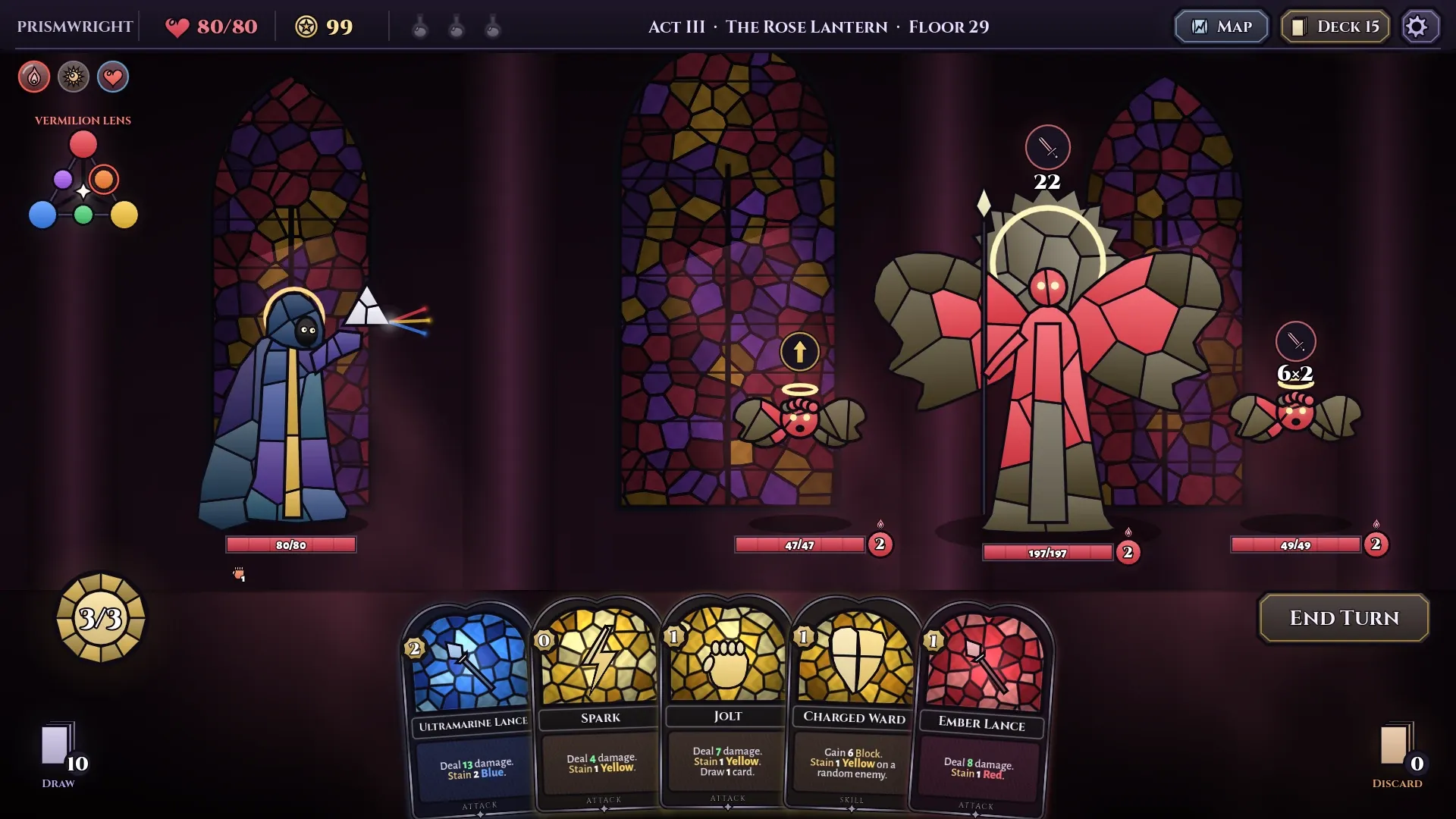
Prismwright
A stained-glass roguelike deckbuilder about painting glass monsters with color and mixing the stains until they shatter.
A spaceflight simulation about building rockets, flying them, and following one strange measurement all the way to its answer.
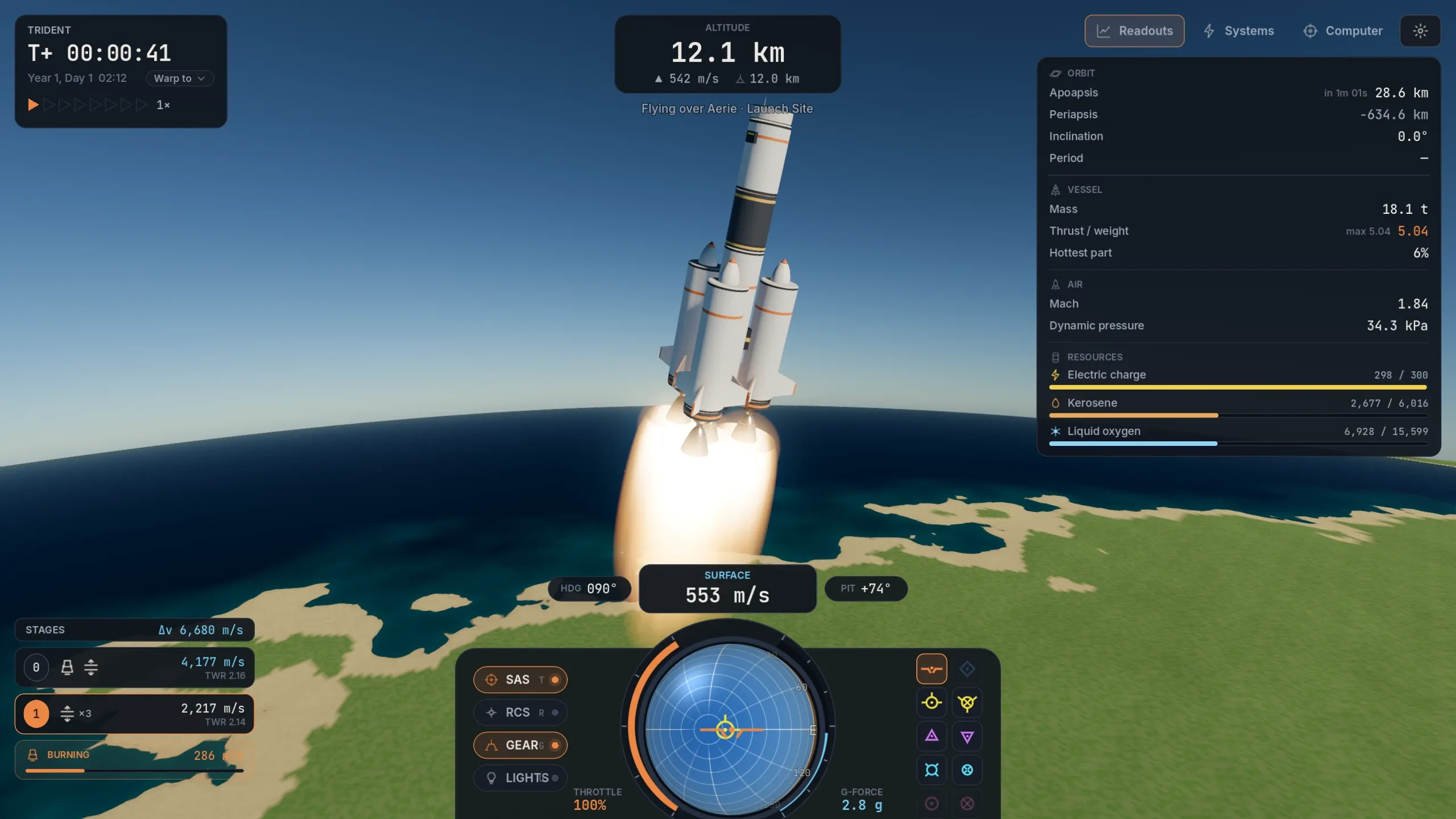
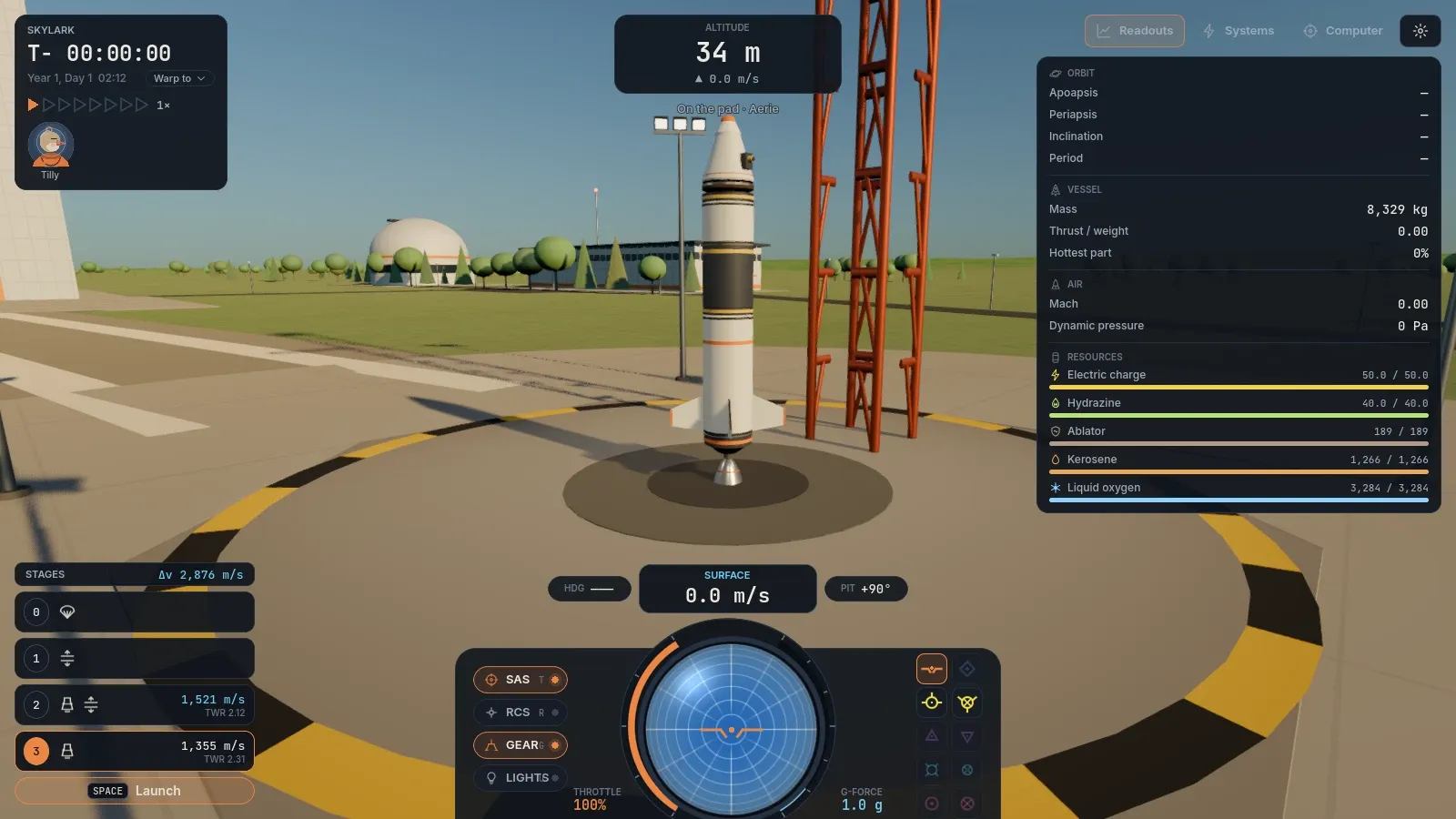
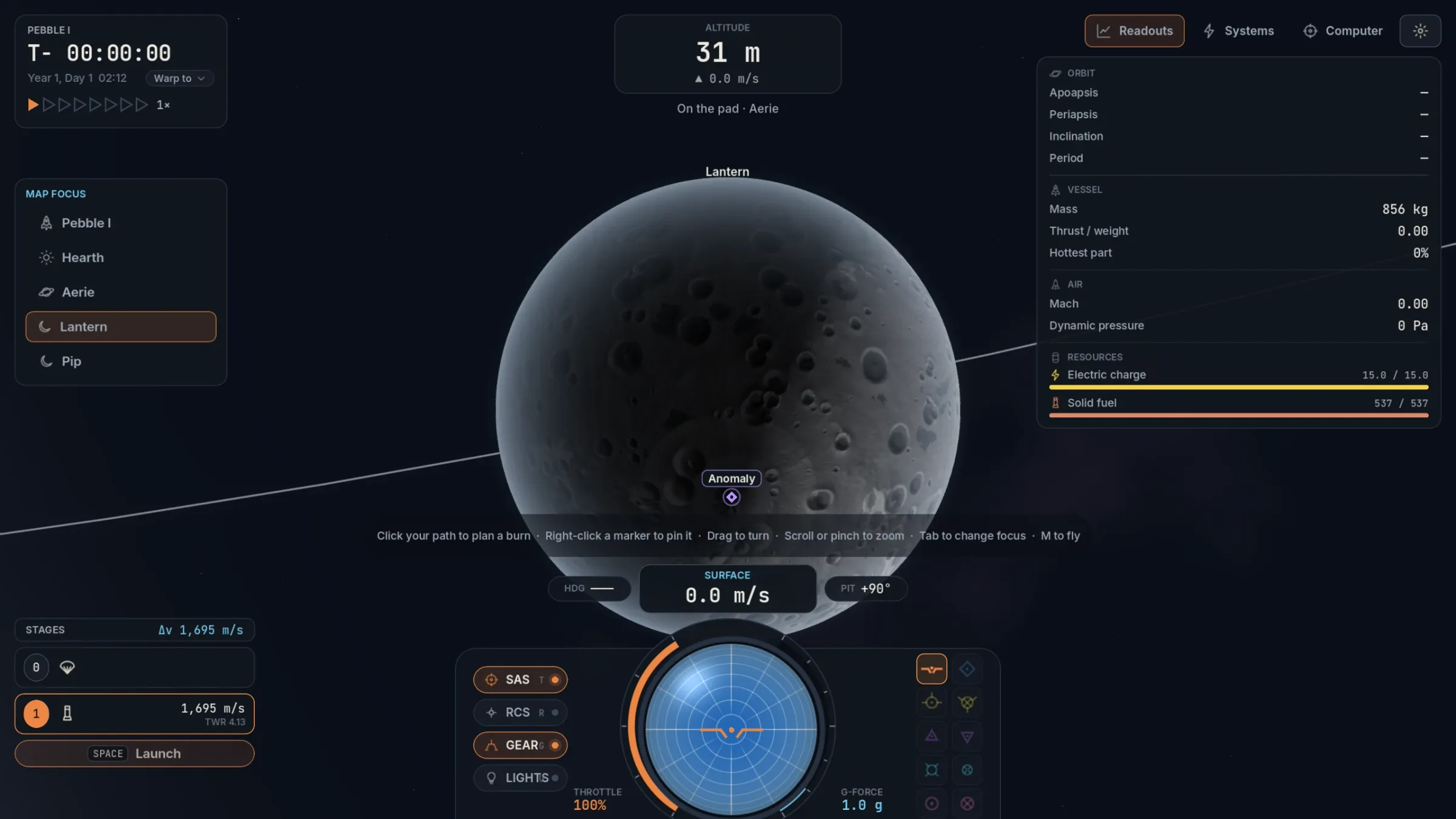
Lighter Than Nothing is a spaceflight simulation for players who enjoy engineering. Rockets are designed part by part, tested on the ground and flown under real orbital mechanics around a home world and its two moons, in pursuit of a mystery on the moon Lantern.
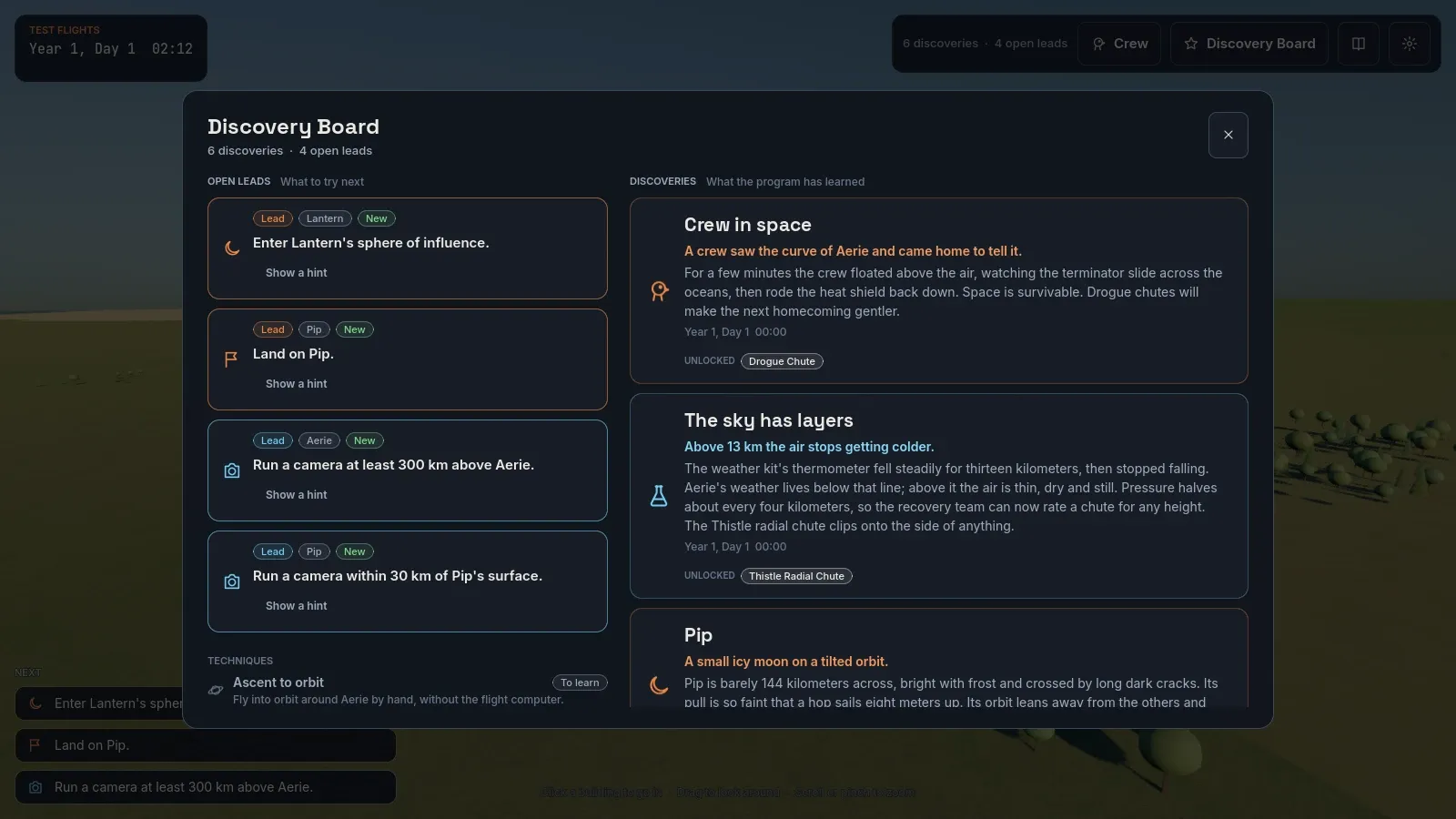
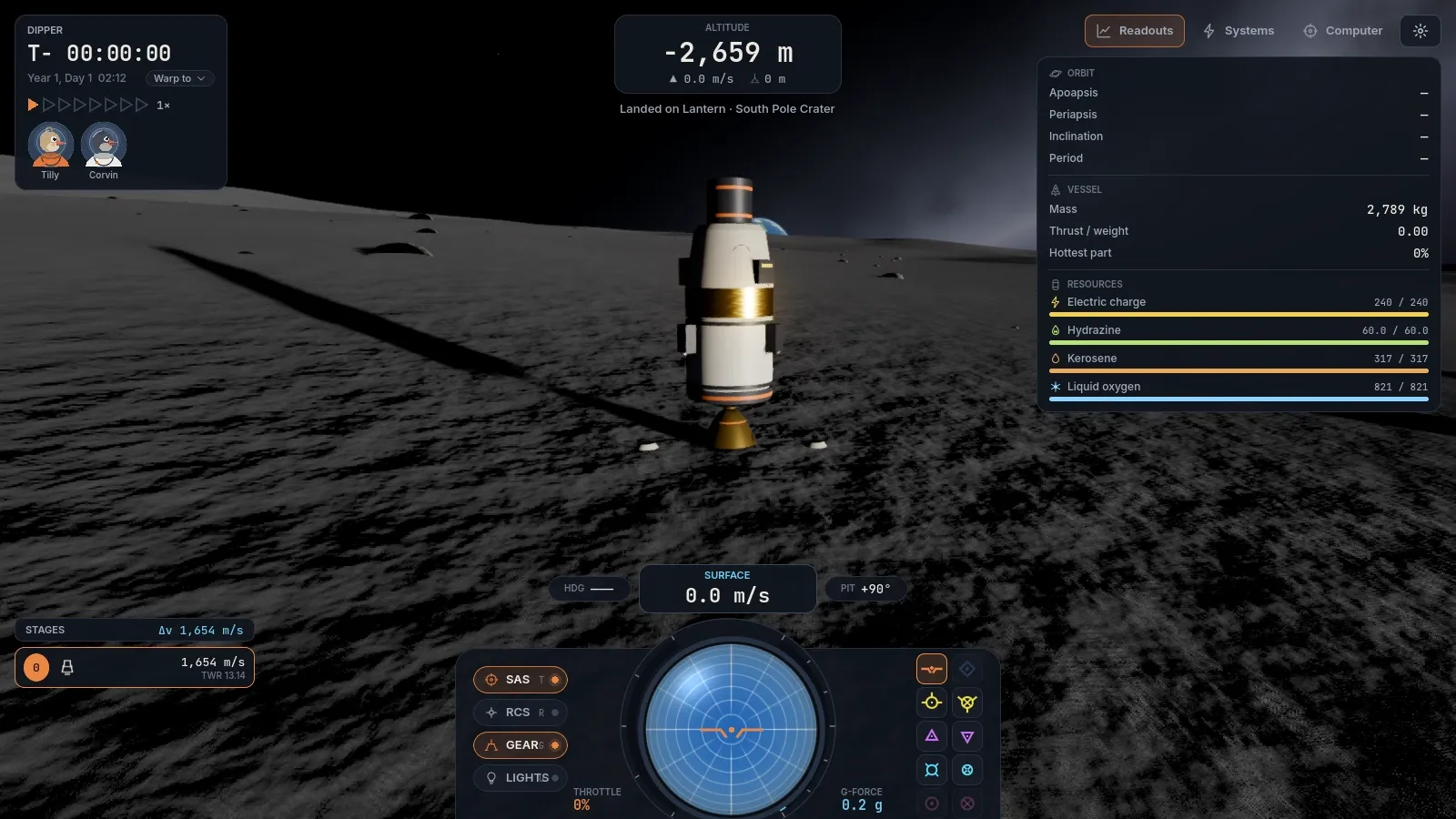
There is no money to earn. Progress comes from discoveries, which unlock new parts and open new leads. One lead matters more than the rest: low polar orbits over Lantern drift from their predicted paths, always near the south pole, as if something there pulls differently from the rest of the moon. Following it means mapping Lantern’s gravity from orbit, then landing in the crater at the pole to find out what is down there.
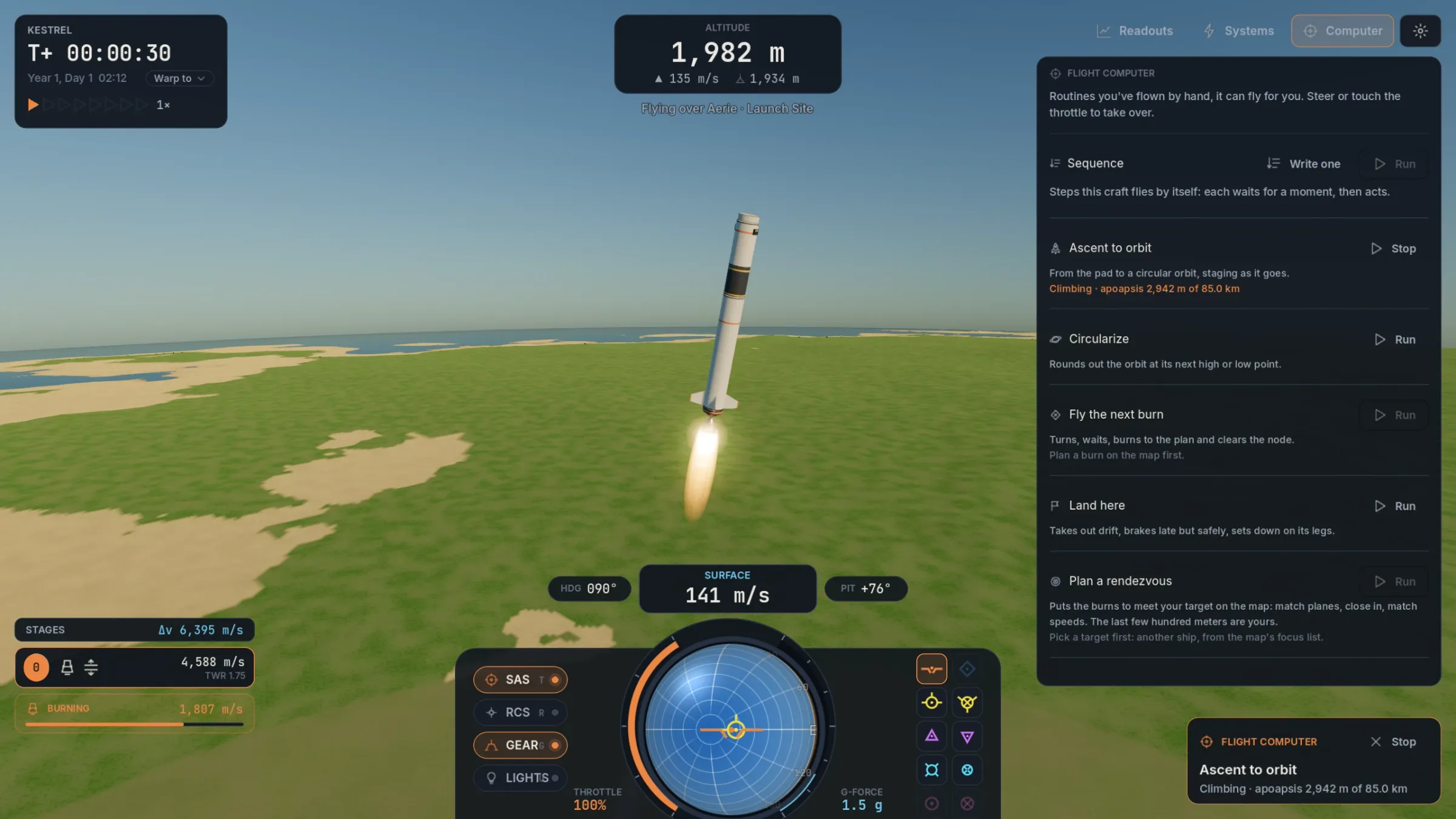
The flight computer can only fly what the player has already flown. Reaching orbit by hand teaches it the ascent, and flying a planned burn, reaching a moon, meeting another ship and landing without air each teach it something new. Routine flights can then be handed over, while every new challenge is flown by hand first. Flights can also be scripted with a no-code sequence editor.
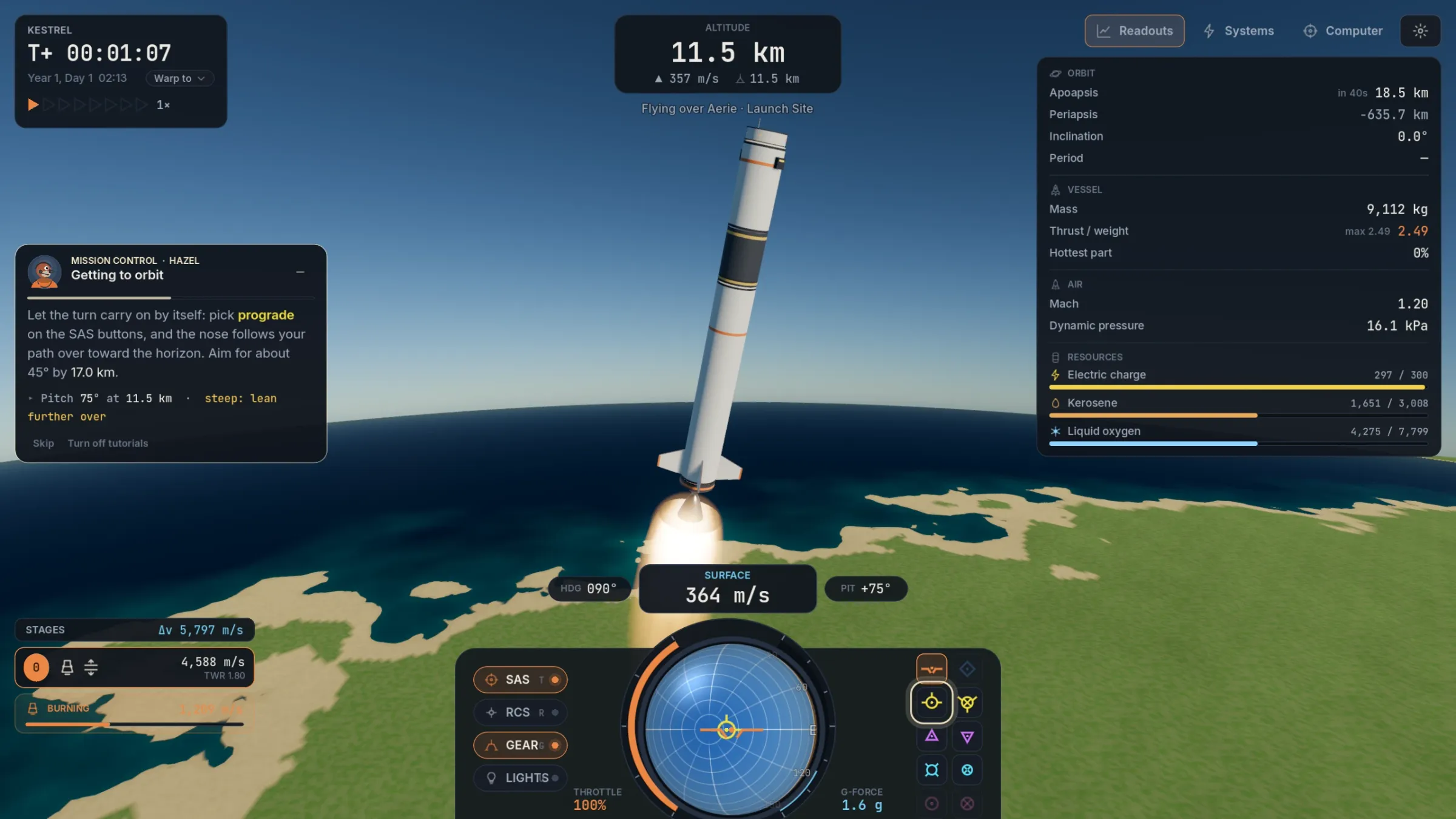
Hazel, the flight director, steps in with a short card the first time something new comes up, from the first launch to the first docking. The card shows live numbers, highlights what to look at and moves on once the player has done it. The orbit tutorial follows the actual rocket, judging the gravity turn and calling out each spent stage. Tutorials can be skipped or turned off.
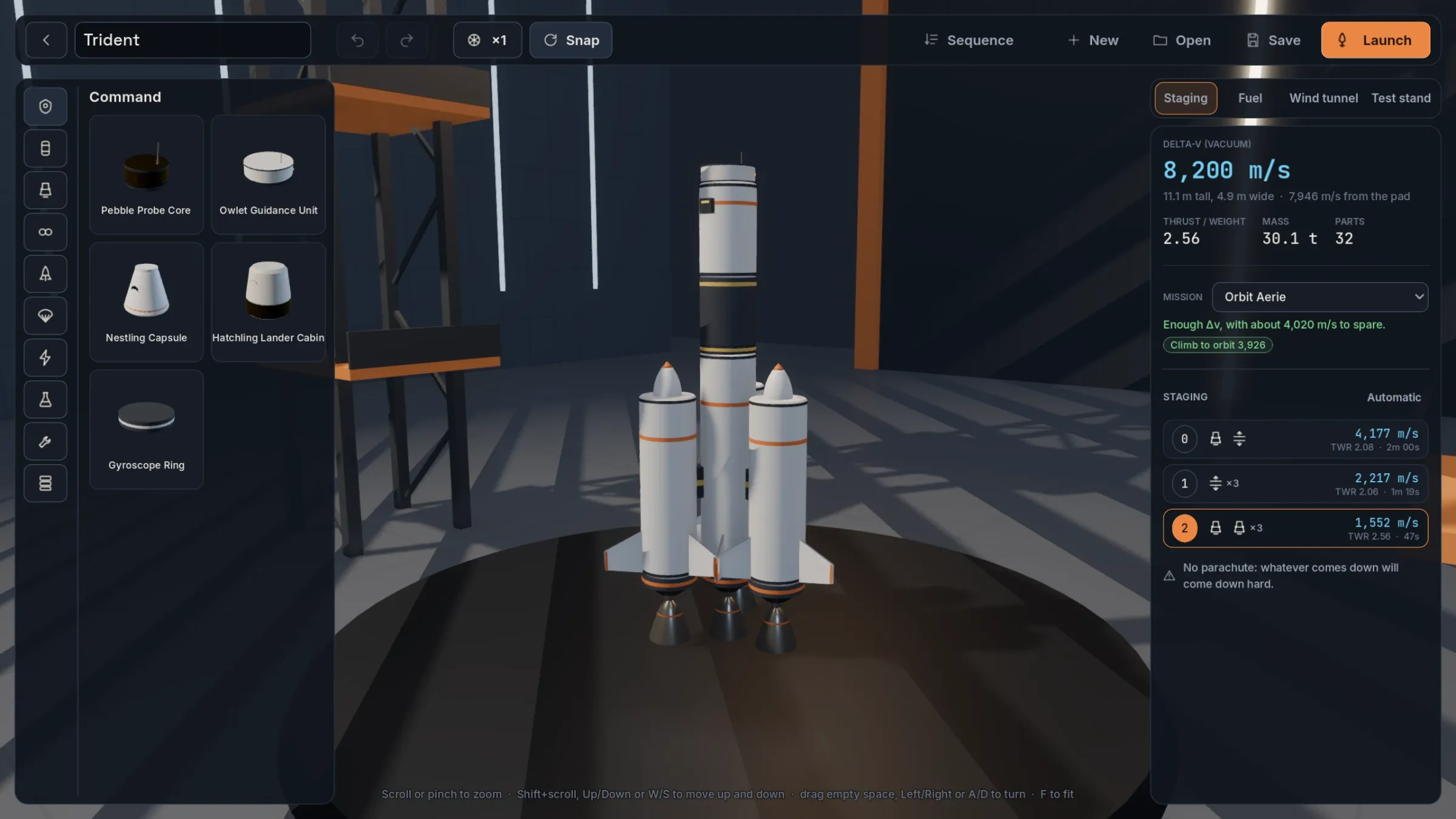
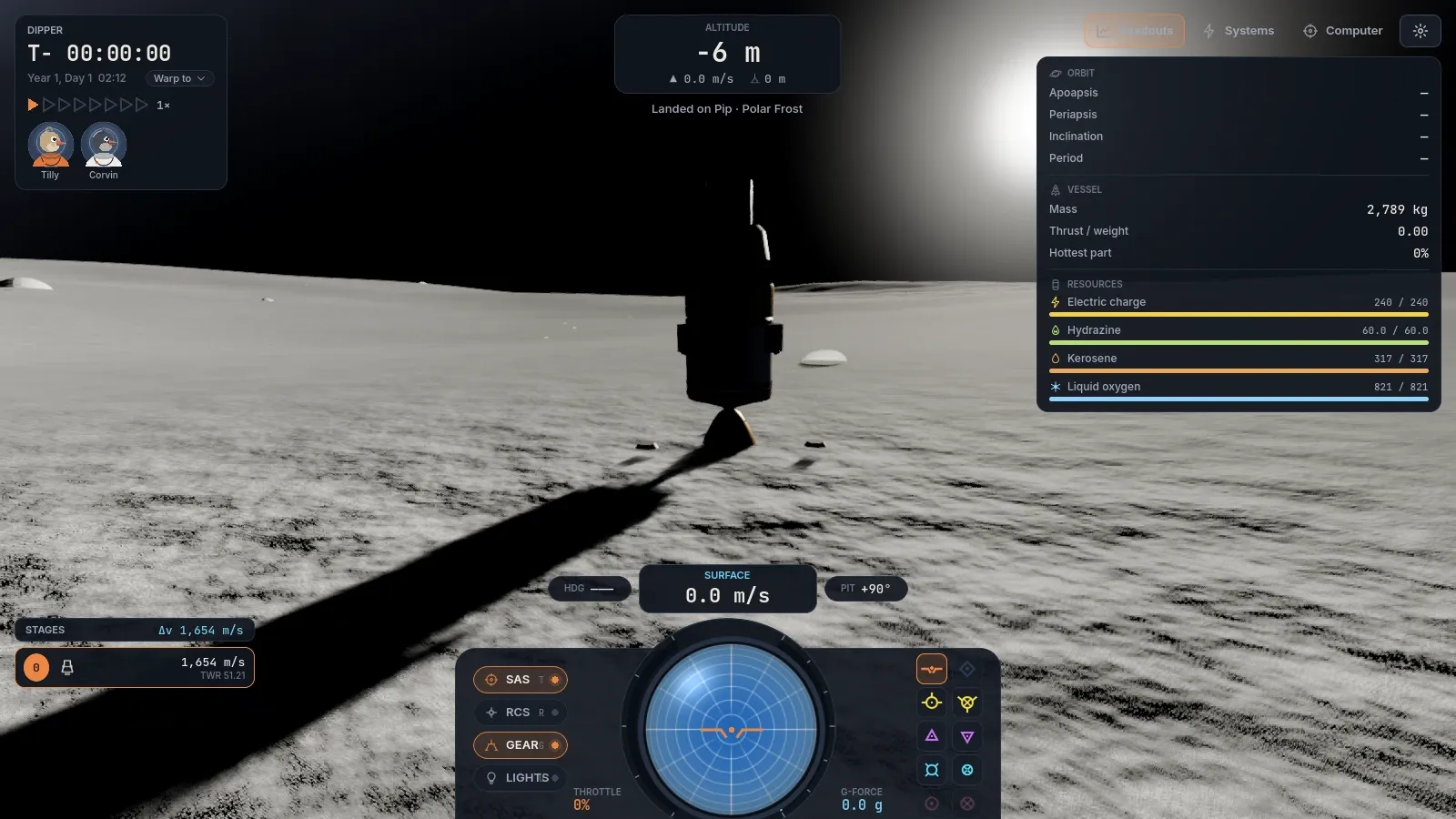
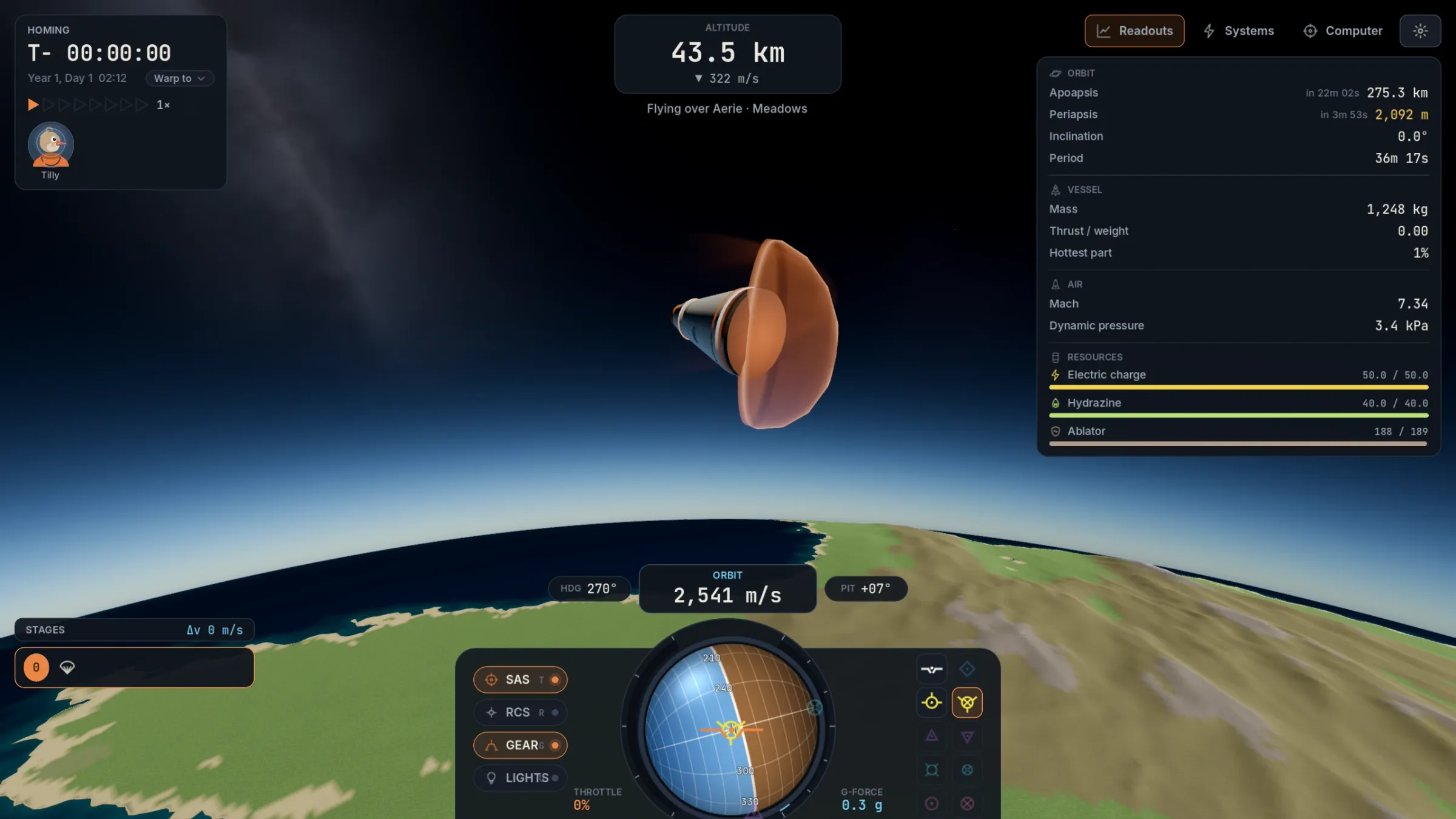
The assembly hall supports staging, fuel routing, symmetry, subassemblies and a revision history that records how each version flew. Before launch, a wind tunnel and a static-fire stand show how a rocket will behave, and a mission check runs the stages through each leg of the trip to see whether there’s enough delta-v, and enough thrust to land. In flight, the simulation covers aerodynamics, re-entry heating, parachutes, docking, crewed spacewalks and landings on two moons.
The crews are Kips, small flightless birds who built rockets because they never could fly. If a crewed part is destroyed, its Kips bail out in a survival egg that shrugs off heat and hard landings and opens its own parachute. Eggs that come down on Aerie are picked up by the recovery team; anywhere else, someone has to fly out and bring them home.
A stained-glass roguelike deckbuilder about painting glass monsters with color and mixing the stains until they shatter.
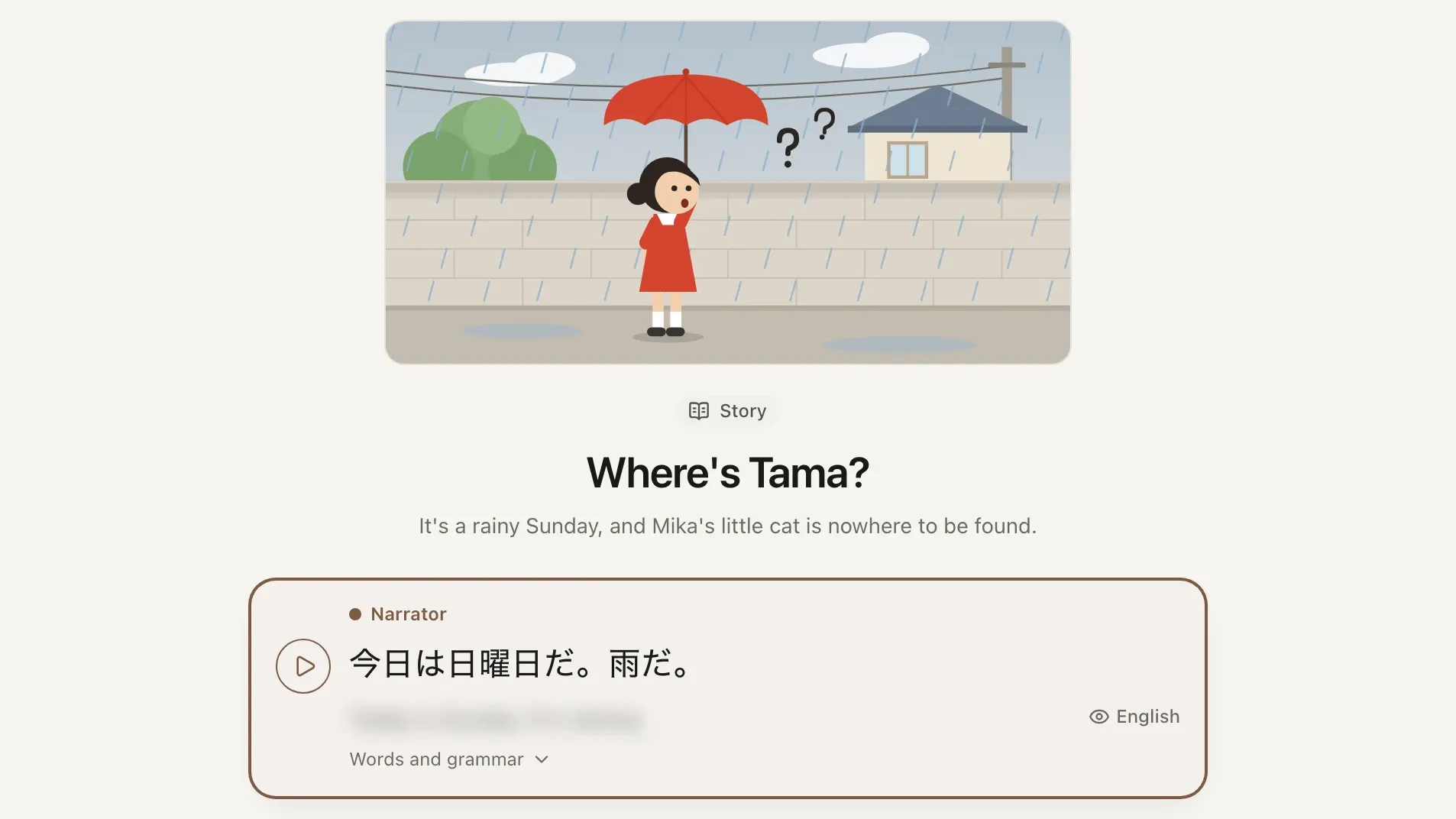
A Japanese course built from short spoken sentences that add at most one new word or grammar point at a time.
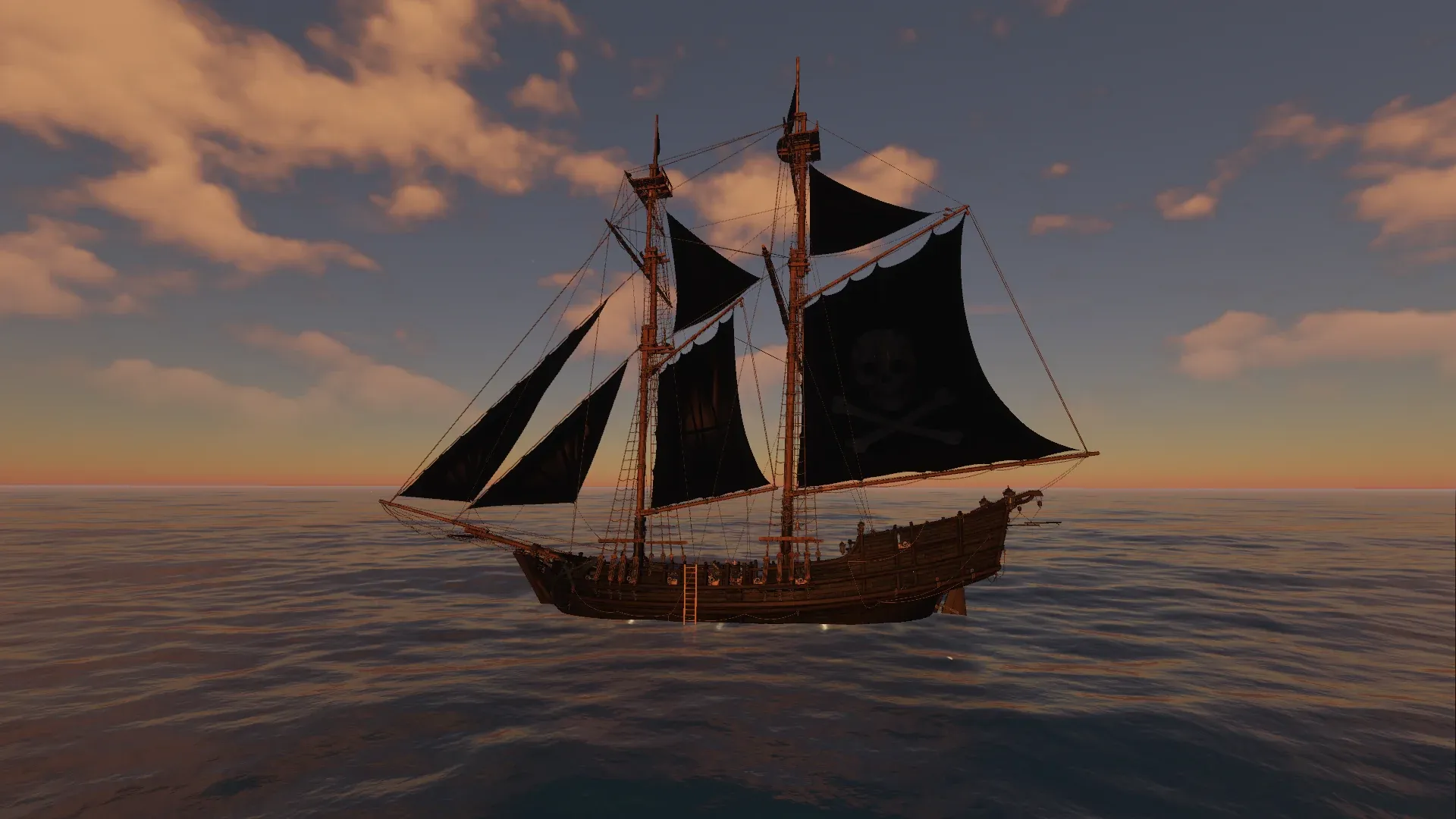
Captain a pirate ship you can walk from bow to stern, then storm islands held by the dead, alone or with a crew of friends.
For press, publishing and business inquiries, or to request playtest access, send the studio a message.
Send a message